
Cheapest Way to Cover a Cinder Block Wall: 9 Budget-Friendly Options
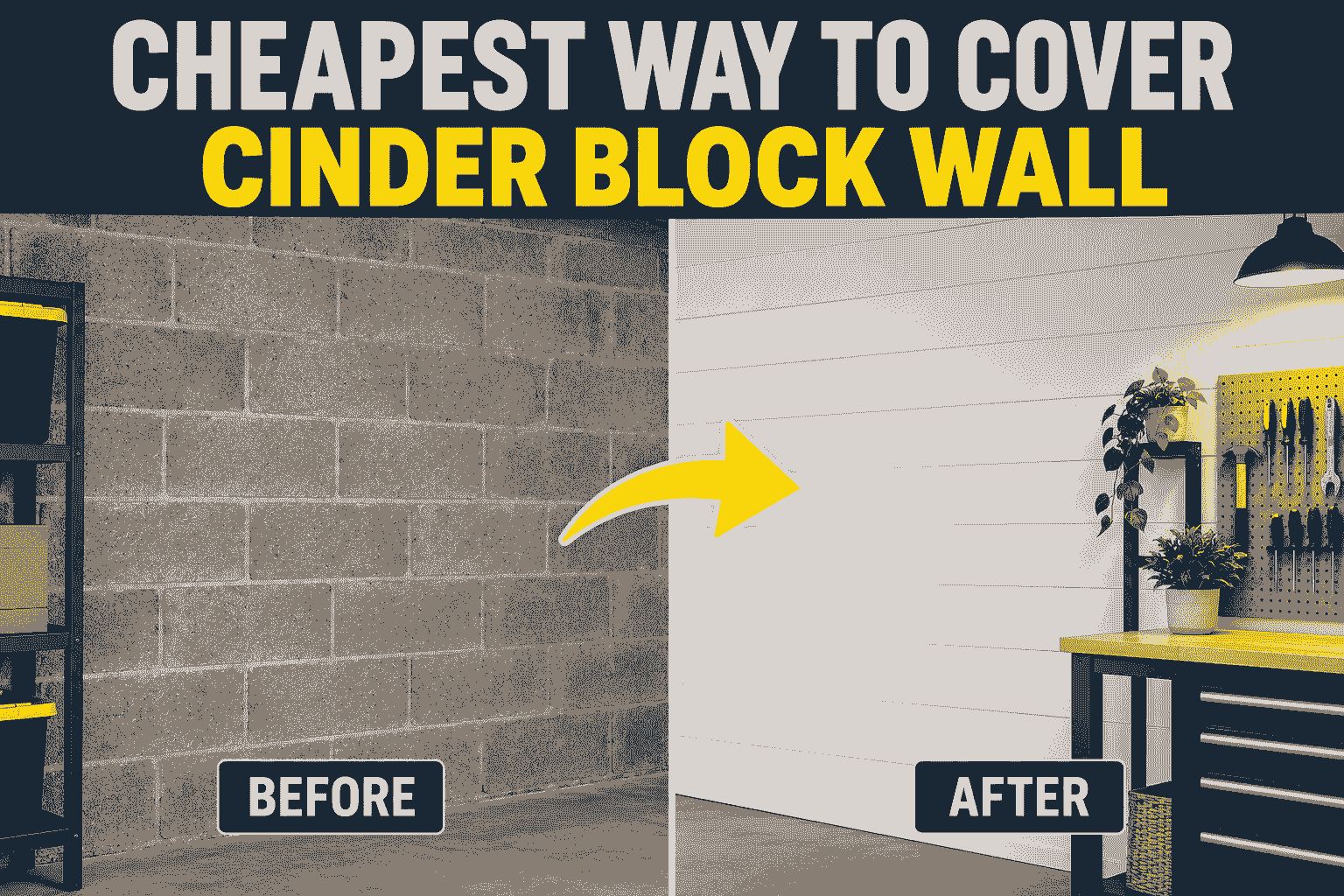
An unfinished cinder block wall can make a room, basement, garage, patio, or exterior area look cold and unfinished. Fortunately, you don’t need to spend a fortune to cover it.
The cheapest way to cover a cinder block wall depends on where the wall is located, whether it is exposed to moisture, and how smooth or finished you want it to look. For many homeowners, painting the blocks is the lowest-cost option. However, if you want to completely hide the block pattern, options such as plywood, paneling, drywall, or inexpensive wall coverings may be better.
Below are some of the most affordable ways to cover cinder block walls, starting with the options that generally require the least money.
What Is the Cheapest Way to Cover a Cinder Block Wall?
Painting a cinder block wall is usually the cheapest way to improve its appearance, especially if you are willing to do the work yourself.
A good masonry or concrete paint can cover the gray color and give the wall a cleaner appearance without requiring a separate wall structure.
However, paint does not hide the texture or individual block lines. If your goal is to make the wall look like a conventional finished wall, you will need a covering such as paneling, drywall, plywood, or another type of wall material.
Quick comparison
| Method | Approximate Cost | Hides Block Pattern? | Best For |
|---|---|---|---|
| Paint | $ | No | Cheapest makeover |
| Whitewash | $ | No | Rustic appearance |
| Fabric | $–$$ | Yes | Temporary/interior use |
| Plywood | $$ | Yes | Garages and utility areas |
| Wall paneling | $$ | Yes | Finished appearance |
| Drywall | $$–$$$ | Yes | Interior living spaces |
| Stucco | $$–$$$ | Mostly | Interior/exterior |
| Faux brick/stone panels | $$–$$$ | Yes | Decorative walls |
| Wood slats | $$–$$$ | Yes | Feature walls |
Prices vary significantly depending on the size of the wall, local material prices, installation costs, and whether you do the work yourself.
1. Paint the Cinder Block Wall
If your main priority is keeping costs down, start with paint.
Painting does not technically “cover” the cinder blocks, but it can dramatically improve their appearance for relatively little money.
Before painting, clean the wall thoroughly and allow it to dry. If the wall is bare masonry, use a suitable masonry/concrete primer when required and then apply masonry paint designed for the surface.
Why paint is so cheap
You don’t need to build another wall in front of the blocks. You are simply changing the appearance of the existing surface.
A light color such as white, cream, or light gray can also make a dark basement, garage, or utility room feel brighter.
Best for: garages, basements, workshops, utility rooms, patios, and exterior masonry.
Downside: The cinder block texture and mortar joints will remain visible.
2. Whitewash the Wall
Whitewashing is another inexpensive option if you don’t mind seeing some of the original block texture.
Instead of creating a completely opaque surface, whitewash gives the masonry a lighter, softer appearance while allowing some of the underlying texture to show through.
This can work particularly well if you want a rustic or industrial look rather than trying to make the wall appear like drywall.
Best for: basements, garages, garden walls, rustic interiors, and outdoor spaces where a simple finish is acceptable.
3. Use Fabric for a Temporary Cover
For an interior wall where you mainly want to hide an unattractive surface, fabric can be a surprisingly inexpensive solution.
You can hang large pieces of fabric over the wall using an appropriate mounting method. Because fabric is flexible, it can hide the uneven texture of cinder blocks without requiring extensive construction.
This is particularly useful for temporary spaces, rental properties, event areas, or rooms where you don’t want to permanently alter the wall.
However, avoid using fabric to conceal a wall that has persistent moisture problems. Moisture trapped behind a covering can create additional problems.
Best for: temporary interior applications and decorative spaces.
4. Cover It With Plywood
Plywood can be a practical middle-ground between simply painting the blocks and constructing a full drywall system.
Large plywood sheets can cover the block pattern and create a relatively flat surface. You can leave the plywood with a simple unfinished appearance, paint it, stain it, or use it as a base for other finishes.
Plywood is particularly useful in garages, workshops, sheds, and utility spaces because it can also provide a surface to attach shelves, hooks, tools, and storage systems.
The important part is installing it correctly. Depending on the wall and local building requirements, you may need furring strips or another appropriate fastening system rather than attaching the plywood directly to the masonry.
Best for: garages, workshops, utility rooms, and storage areas.
5. Install Inexpensive Wall Paneling
Budget wall panels can hide cinder blocks much more effectively than paint.
There are many types of inexpensive paneling available, including wood-look panels, PVC panels, decorative panels, and other lightweight materials.
This option can give you a finished appearance without the additional work involved in taping and finishing drywall.
When choosing a paneling system, make sure it is appropriate for the environment. A material suitable for a dry bedroom may not be appropriate for a damp basement or exterior wall.
Best for: interior rooms where appearance is important but the budget is limited.
6. Install Drywall Over the Wall
Drywall can turn an unfinished cinder block wall into a conventional-looking interior wall.
However, it is generally not the cheapest option once you include the framing or furring system, drywall, fasteners, joint compound, tape, primer, and paint.
The advantage is the final appearance. Once properly installed and finished, the cinder blocks can essentially disappear behind a smooth painted surface.
There is one major consideration: moisture.
If the cinder block wall is below grade or has water intrusion, do not simply cover the problem with drywall. Moisture should be addressed before installing a finished wall system.
Best for: dry interior living spaces where you want the most traditional finished-wall appearance.
7. Apply Stucco or a Masonry Finish
If you want to keep the masonry character while making the wall look more finished, a stucco-type coating or other suitable masonry finish can be an option.
It can help cover some of the visual irregularities between the blocks and create a more uniform surface.
This can be especially useful for exterior walls, although the exact product and installation method should be chosen based on the local climate and exposure to weather.
Best for: exterior walls and interiors where a textured finish is acceptable.
8. Use Faux Stone or Brick Panels
Decorative panels can completely change the appearance of a cinder block wall.
Faux stone, brick, concrete, and wood-look panels are available in different price ranges. They can make a basic masonry wall look like a deliberate design feature.
This isn’t usually the absolute cheapest method, but it can provide a much more attractive result than simply painting the blocks.
If you’re covering a large wall, compare the cost per square foot rather than just the price of individual panels.
Best for: accent walls, patios, entertainment areas, and finished interiors.
9. Create a Simple Wood Slat Wall
If you want a modern appearance, inexpensive wood strips can be used to create a slatted feature wall.
You don’t necessarily need expensive finished lumber. Depending on the project, budget-friendly boards can be cut, sanded, stained, or painted.
However, a wood slat wall requires more material and labor than painting, so it isn’t the best choice if your only goal is to spend the absolute minimum.
Best for: living spaces, home offices, entertainment rooms, and feature walls.
Which Option Is Cheapest?
If you’re trying to spend as little as possible, the options generally rank like this:
1. Paint — cheapest overall
2. Whitewash — very inexpensive
3. Fabric — inexpensive for temporary interior applications
4. Basic wall panels — affordable way to hide the blocks
5. Plywood — practical and durable
6. Drywall — better finished appearance but more work
7. Stucco/masonry finishes — useful for certain walls
8. Faux stone or brick panels — decorative but usually more expensive
9. Wood slat wall — attractive but material- and labor-intensive
The cheapest option isn’t necessarily the best option. The right choice depends on whether you simply want the wall to look better or whether you want to completely hide the cinder blocks.
Cheapest Way to Cover a Cinder Block Wall in a Basement
Basements require extra consideration because moisture is often a bigger concern.
If the wall is completely dry and you simply want to improve its appearance, masonry paint may be the simplest inexpensive solution.
If you want a finished wall, you could consider a properly constructed framed or furring-wall system with an appropriate interior finish.
But don’t cover a damp cinder block wall just to hide the problem.
Look for signs such as:
- Damp or wet areas
- White powdery deposits on the masonry
- Peeling paint
- Musty odors
- Water stains
- Mold or mildew
If these problems exist, deal with the moisture source first.
Cheapest Way to Cover a Cinder Block Wall Outside
For an exterior cinder block wall, paint or a suitable masonry coating is usually one of the most economical choices.
You can also consider a masonry finish, stucco, or exterior-rated panels depending on the appearance you want.
Exterior materials need to withstand rain, temperature changes, sunlight, and moisture, so don’t use an inexpensive interior wall covering simply because it costs less.
For an outdoor wall, the cheapest material upfront can become the most expensive choice if it fails quickly.
Can You Put Drywall Directly Over Cinder Block?
Generally, you should not think of drywall as simply being glued directly onto every cinder block wall.
A proper installation may require a framing or furring system, depending on the wall, moisture conditions, insulation requirements, and local building practices.
Before choosing drywall, consider:
- Is the wall dry?
- Is it below grade?
- Do you need insulation?
- Will the wall need electrical outlets?
- How much space can you afford to lose?
- What does your local building code require?
If you only want to make a garage or utility room look better, drywall may be unnecessary. Painting or plywood could accomplish the goal for less money.
How to Make a Cinder Block Wall Look Good on a Very Small Budget
You don’t always need to completely hide the blocks.
A cheap makeover can sometimes look better than an expensive covering if you work with the existing masonry.
For example:
- Clean the wall thoroughly.
- Repair obvious cracks or damaged areas.
- Apply an appropriate masonry primer if needed.
- Paint the wall a light neutral color.
- Add shelves, artwork, plants, lighting, or storage.
- Use the wall’s industrial texture as part of the design.
This approach can turn an unattractive cinder block wall into an intentional industrial-style feature without spending money on a complete wall-covering system.
What Should You Choose?
The best option depends on your goal.
If you want the absolute cheapest solution:
Paint the wall.
If you want cheap but want the blocks hidden:
Consider basic wall panels or plywood.
If you want a normal finished interior wall:
A properly constructed drywall system is usually the better choice.
If it’s a garage or workshop:
Paint or plywood can offer an excellent combination of cost and practicality.
If it’s an exterior wall:
Use an exterior-rated masonry coating, stucco, or another material designed for outdoor exposure.
If the wall has moisture problems:
Fix the moisture issue before covering it.
Final Thoughts
The cheapest way to cover a cinder block wall is usually to paint it, but that doesn’t mean painting is the right solution for every situation.
If you only want to improve the appearance, masonry paint provides the biggest visual change for the least money. If you want to completely hide the blocks, inexpensive paneling or plywood may provide better value. For a fully finished interior, drywall can produce the best result, but it requires more materials, labor, and planning.
Before buying anything, determine where the wall is located, whether it has moisture problems, and whether you need to completely hide the cinder block texture. Those three factors will help you choose the cheapest solution that actually works for your project.